
Developer Experience Lead at Contentstack
Tim Benniks
Tim is Developer Experience Lead at Contentstack with a focus on developer relations, community building, and content creation. He’s active in the developer community through speaking engagements at conferences and creation of YouTube videos on modern technologies. Tim collaborates regularly with startups like Cloudinary, Supabase, Algolia, HeyGen, and NuxtJS, and is a member of the MACH Alliance Tech Council. It's all about quality, community, and development of great websites.
Blog posts

Where AI Should Run: Chat Apps, Local LLMs, MCP, APIs, CLIs, and AgentOS
A visual guide to understanding where AI should run, including local LLMs, chat apps, coding agents, MCP, APIs, CLIs, AgentOS, and BYO LLM architectures. Learn how context, tools, permissions, and governance shape the right AI workflow.

Responsibilities of Skills, MCP, CLIs, and APIs
Clarifies responsibilities across Skills, MCP servers, CLIs, and APIs for AI dev workflows—keeping auth, permissions, and audit boundaries clean.

Migrate Contentful to Contentstack in 10 minutes. Content and Code.
Launch an AI-guided tool to migrate from Contentful to Contentstack, moving content and rewriting app code via deterministic CLI steps.
AI will not live in one place, but trust has to
This article discusses the tension between rapidly expanding enterprise AI capabilities and the need for strong governance, introducing a two-layer architecture: off-platform AI for experimental reach and on-platform AI for trusted, governed execution. It explains how combining both layers allows organizations to benefit from flexible, distributed AI while maintaining oversight, brand integrity, and risk management.
Understanding how Contentstack CMS, Personalize, and Lytics work together
Learn how Contentstack CMS, Lytics, and Personalize work together to deliver real-time personalization using structured content, user data, and edge decisions.

The future of software is bespoke
This article explores why generic SaaS dashboards are becoming outdated as modern APIs, SDKs, scaffolding, and AI-assisted development enable teams to quickly build bespoke interfaces tailored to their exact workflows. It discusses how platforms should provide core infrastructure while teams take ownership of the experience layer, and examines both the benefits and trade-offs of this new paradigm.
Code is craft now, not labor
This article explores how advances in AI and automation have transformed programming from a required task for software production into an act of creative expression, much like knitting transitioned from necessity to craft. The author discusses the enduring value of foundational development skills and predicts a future where coding by hand is a rewarding choice rather than a job requirement.
.png?width=3840&height=2016&quality=90&auto=avif&format=pjpg&fit=crop)
Contentstack agent skills security policy
This policy defines the minimum security requirements for building, publishing, and maintaining Agent Skills within the Contentstack ecosystem. It protects users, content, and systems from prompt injection, unsafe markdown rendering, and model hallucinations.

Agents are users now and this website is ready
AI assistants are now part of every developer's workflow. This post covers why we built developers.contentstack.com to serve both humans and agents, and how to connect any MCP-capable client to start building on top of it in minutes.
Codex built a skill with custom CLI for itself. Is MCP even a thing anymore?
This article explores how Codex, given a management token, API key, and precise schema documentation, imported content flawlessly and even built a custom CLI and skill to repeat the process, raising questions about the future relevance of MCP in content operations.
.png?width=3840&height=2016&quality=90&auto=avif&format=pjpg&fit=crop)
When Output Is Cheap, Taste Is Everything
This article explores how AI has radically reduced the cost of producing things, shifting the real bottleneck from implementation to judgment. It argues that taste—the ability to decide what is truly worth building—and genuine rest are the new sources of leverage in a world of fast, cheap output.

Plot twist! AI made developers more valuable.
This article challenges the common belief that AI will replace developers, suggesting instead that AI actually increases developers' value by boosting their productivity and exposing inefficiencies in non-technical roles. The real organizational shift is towards reducing layers between problems and code, making developers more essential than ever.
The Launch API is a product builder, not just a deployment endpoint
The Launch API does more than trigger deployments. It gives teams the building blocks to shape their own release workflow, from environments to logs to cache revalidation, in the tools they already use.

Do we still need SDKs in the age of AI agents?
With AI agents capable of generating production-ready clients from well-designed APIs and OpenAPI specs, the traditional necessity of hand-crafted SDKs is being challenged. This article explores the shifting role of SDKs, the benefits of leveraging AI for client generation, and when vendor-maintained SDKs may still hold value.

Your legacy patterns are technical debt in modern architecture
Developer teams migrating from legacy systems to modern architecture often exacerbate technical debt by carrying over outdated patterns and habits. This article explores common pitfalls and offers guidance on how to successfully transition by embracing new paradigms and thorough discovery.
The pragmatic guide to coding with AI agents
This article offers a pragmatic perspective on using AI agents for software development, emphasizing best practices such as clear task scoping, environment cleanliness, and practical workflow management. Learn how to avoid common pitfalls, structure effective collaborations, and maximize reliability from AI coding agents.
Want to be better at vibe coding? Become a better coder
AI-powered development tools are making coding more accessible, but true success relies on understanding coding fundamentals. Learn why improving your coding skills dramatically increases the effectiveness of AI tools and helps you avoid common pitfalls like security vulnerabilities and deployment issues.

MCP fragmentation, context efficiency, and the rise of curated skills
This article explores the fragmentation of the Model Context Protocol (MCP) in the AI ecosystem, highlighting challenges with context window efficiency, the complexity developers face, and emerging solutions like curated tool subsets and Claude Skills. It offers insights into protocol-layer issues, strategies for improving reliability, and the pragmatic necessity for adaptable system architectures amid ongoing standards wars.

Cursor, rules, and my vibe engineer workflow
This article discusses how to turn Cursor AI from a simple code-generating tool into a reliable engineering system using explicit rules, structured commands, and real project context, ultimately achieving trustworthy speed and consistency when building SaaS projects.
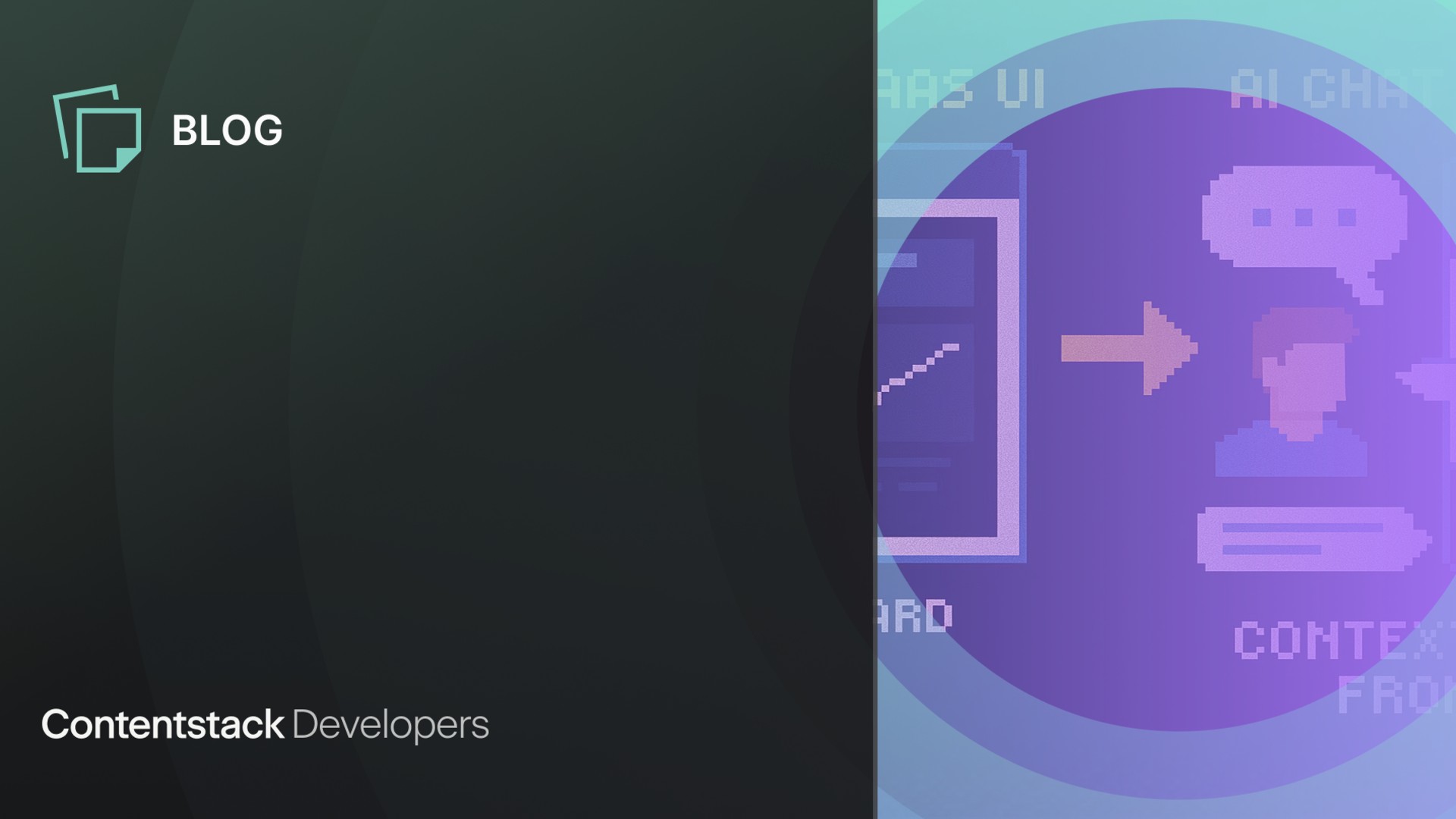
AI chat interfaces will replace web apps
This article discusses how AI-driven chat interfaces are poised to replace traditional static web apps by providing dynamic, context-aware user interactions that adapt to individual intent. It explores the evolution of front-end development, challenges facing this transformation, and the changing roles of existing tools and design.
Build context-aware MCPs, not API wrappers
Discover why simply wrapping APIs isn't enough for Model Context Protocol (MCP) servers. Learn how adding project and user context can transform MCPs into dynamic, efficient engines that enhance AI reasoning, reduce errors, and scale across complex environments.
Guides
Configure, test, and prepare for production
Configure and test a custom Contentstack MCP server, add guardrails for write tools, troubleshoot auth/region issues, and follow a production checklist.
Add authentication and OAuth
Learn how to add authentication to a Contentstack MCP server using env vars, CDA/CMA tokens, or OAuth. Includes a TypeScript auth helper.
Execute Contentstack tool calls
Implement a Contentstack tool-call executor: map args to paths, query, headers, REST/GraphQL bodies, resolve regional base URLs, and run fetch.
Build the MCP server
Build a Node.js MCP server in TypeScript, fetch Contentstack tool definitions, allowlist tools, and register them as MCP tools via stdio transport.
Understand Contentstack tool definitions
Learn how Contentstack tool definitions work, where to fetch them, and how to use inputSchema and mapper to build API requests dynamically in an MCP server.
How to build your own MCP server with Contentstack's tools API
Learn how to build a custom MCP server using Contentstack Tools API: fetch tool definitions, register MCP tools, proxy calls to REST/GraphQL, and add controls.
Frequently asked questions
FAQ for Contentful migrations using deterministic CLI tooling: AI does not transform content, manual steps required, timing estimates, and supported sources.
Troubleshooting and next steps
Troubleshoot common migration failures: expired tokens, Node version issues, non-empty stacks, and missing webhooks. Learn recovery steps and next actions.
What migrates, what needs manual work, and how to verify
Learn what migrates automatically in a Contentful→Contentstack move, what requires manual work, and how to verify content, refs, rich text, and code.
Migrating your application code
Migrate app code to Contentstack by rewriting the data layer in place. Learn required inputs, reference/RTE changes, and how verification checks catch issues.
The expert path: migrate with CLI commands
Run Contentful-to-Contentstack migrations with csdx CLI: create end-to-end or run export/convert/audit/import steps, inspect bundles, and track status.
The guided path: migrate with the AI skill
Run a guided migration via an AI skill to move from Contentful to Contentstack. It validates prerequisites, migrates content and code, and outputs artifacts.
Prerequisites and setup
Set up a Contentful-to-Contentstack migration: confirm Node 20+, install the Contentstack CLI and plugin, set region, authenticate, and gather inputs.
Migrating from Contentful to Contentstack in depth
Deep dive guide to migrate from Contentful to Contentstack using an AI-guided workflow or the @contentstack/cli-external-migrate CLI plugin.
AI agent migration playbook
Execution playbook for migrating from Contentstack JavaScript Delivery SDK to the TypeScript Delivery SDK, with API translations, caching, and verification steps.
Migration checklist, troubleshooting, and next steps
Close out a Contentstack Delivery SDK migration with a checklist, common troubleshooting fixes, safe rollout steps, and docs for what to do next.
Using the TypeScript Delivery SDK in JavaScript projects
Learn how to use the Contentstack TypeScript Delivery SDK in JavaScript projects, avoid TS-only syntax, add JSDoc types, and migrate safely.
Caching, utilities, preview behavior, and runtime differences
Migrate to Contentstack TypeScript Delivery SDK: update caching via persistence plugin, add utilities, verify Live Preview/Visual Builder, and check runtime behavior.
Rewrite queries, pagination, sorting, and field selection
Migrate Contentstack queries from JavaScript SDK to TypeScript Delivery SDK: filters, references, field selection, sorting, pagination, and limits.
Convert stack, entry, asset, and content type calls
Migrate Contentstack JavaScript SDK calls to the TypeScript Delivery SDK: sync, single entries, collections, assets, content types, and chain-order pitfalls.
Install and initialize the TypeScript Delivery SDK
Install @contentstack/delivery-sdk and initialize the TypeScript client. Use a wrapper module, keep env vars stable, add types gradually, and verify a fetch.
Why migrate, and what actually changes
Learn what changes (and what doesn’t) when migrating from Contentstack JavaScript Delivery SDK to the TypeScript SDK, with safe steps and pitfalls.
Migrating from the JavaScript Delivery SDK to the TypeScript Delivery SDK
Migrate from Contentstack JavaScript Delivery SDK to the TypeScript Delivery SDK with minimal rewrites: update imports, stack, queries, caching, and utilities.
Part 4: deployment with Contentstack Launch
Part 3: common real-world workflows
Part 2: build the frontend with AI
Part 1: set up Contentstack

Build a real website with Contentstack and AI
Build a real Next.js website backed by Contentstack using AI. Model content, connect via the TypeScript Delivery SDK, render pages, and deploy with Launch.
Production readiness, troubleshooting, and next steps
Prepare a Contentstack + Veda frontend for production: secure tokens, understand preview vs published runtimes, prime caches, and troubleshoot common issues.
Customizing Veda for your own project
Learn how to customize the Veda starter safely: update branding first, evolve content types and blocks, change routes deliberately, and keep preview working.
Live Preview and Visual Editor
Learn how Contentstack Live Preview and Visual Builder work: preview tokens, editable tags/CSLP bindings, and Veda’s centralized preview runtime model.
Fetching Content, Routing, and Rendering
Learn how Veda turns Contentstack entries into Next.js pages: region-aware SDK setup, URL-based fetching, cached helpers, metadata, and modular rendering.
How Veda Is Structured
Learn Veda’s codebase structure: how app/, components/, and lib/ map to the content model, and how Contentstack fetchers, rendering, and preview work.
Understanding the Veda Content Model
Learn the Veda content model in Contentstack: core content types, modular blocks, relationships, URL routing fields, and TypeScript payload shapes.
Running Kickstart Veda Locally
Run Kickstart Veda locally: clone the repo, set up .env.local, install dependencies, start Next.js, verify seeded content, and validate builds.
Account, Region, CLI, and Stack Setup
Set up Contentstack for Veda: choose the right region, install and configure the CLI, seed a stack, and create tokens and env vars for preview.
Core Contentstack Concepts
Learn core Contentstack concepts: stacks, content types, entries, assets, environments, locales, references, modular blocks, and Delivery/Preview/Management APIs.
What Contentstack is and why Veda is a good starting point
Learn what Contentstack is in practical terms, what headless CMS means in real projects, and why Veda is a solid, production-minded starter example.
Contentstack 0 to 100 for developers
Learn Contentstack fundamentals with the Kickstart Veda Next.js starter: headless CMS concepts, setup prerequisites, preview vs delivery, and architecture.
AI Agent Playbook for Live Preview and Visual Editor
AI Agents only. Procedure for diagnosing and fixing Contentstack Live Preview and Visual Builder issues: trace preview context, validate SSR/CSR flow, caching, and edit tags.
Middleware and Database-Backed Architectures
Learn how to preserve Contentstack Live Preview context through BFFs, edge middleware, and database caches, so draft content renders reliably end to end.
Debugging, Pitfalls, and Best Practices
Debug Contentstack Live Preview issues with a 6-step workflow. Identify 5 failure modes—hash loss, caching, SSR leaks, SDK config, wrong API—and fix fast.
Edit Tags and Visual Editor
Learn how to add Contentstack edit tags (data-cslp) with addEditableTags and enable Visual Builder for click-to-edit, reordering, and block actions.
Static Site Generation
Learn why SSG conflicts with live preview and how to enable clean draft previews using Next.js Draft Mode or Astro hybrid SSR, avoiding hydration mismatches.
Client-Side Rendering
Implement Contentstack Live Preview with client-side rendering: install and init the SDK, subscribe to edits, refetch preview content, and avoid common CSR pitfalls.
Server-Side Rendering
Implement Contentstack Live Preview for SSR: handle preview hash per request, fetch draft data, disable caching, and prevent hash loss on navigation.
The Ultimate Guide to Contentstack Visual Editor
Everything you need to build bulletproof real-time preview experiences with Contentstack.
How Live Preview works
Understand Live Preview’s real model: three coordinated sessions, event-driven refetching via Preview API, strict session scoping, and no DOM injection.
Live Streams

Exploring Launch Public APIs
The Launch API lets you manage all the resources (Projects, Environments and Deployments) in your Launch project using REST API. Tim and Lo will create a dep...

Vibing with Developer Hub
Contentstack Pulse for Developers: Vibing with Developer Hub
Exploring the possibilities: Contentstack free accounts!
Free accounts are now available on the Contentstack AXP platform. Tim & Lo will walk through what is included in the plan and talk through an e-commerce Jewelry use case.
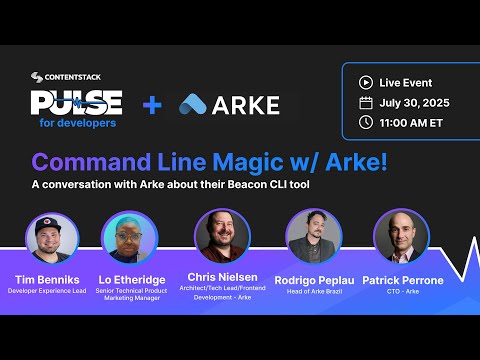
Command Line Magic with Arke!
Join us for an in-depth technical demonstration of Beacon! Arke’s internal developer tool built to streamline composable workflows.We’ll explore why Beacon w...

Cache Priming Magic!
Join Tim & Lo with special guest Dean Haddock, Group PM for Platform and Hosting, for an in-depth conversation about implementing caching to reduce server lo...

Middleware Magic: Personalize and Visual builder in a complex setup
Join us for a deep dive into creating Rich Digital Experiences with Contentstack when faced with existing complex architecture. We will walk through how to ...
Just Automate It!
Join us for a hands-on demonstration of Contentstack's Automate and how to configure it to set content teams up for success. Take a deep dive with special gu...

A journey into the rich text editor w/ Lo & Tim
A journey into the rich text editor and advanced configuration w/ Lo & Tim
Tour de Live Preview
We go over every possible Live Preview configuration from SSG to SSR, and from CSR to GraphQL. This is the final guide on setting up Contentstack Live Previe...
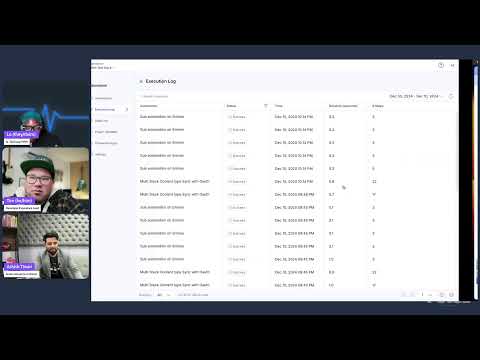
Multi stack content type sync using Automate
Multi stack content type sync using Automate